


Data analytics is supposed to help you make those timely calls. shift a resource here, change a price there, keep a customer from quietly churning. Yet many businesses are stuck with one-size-fits-none dashboards or brittle spreadsheets that crumble the moment you ask them a fresh question. This is where bespoke software for analytics earns its keep. It aligns technology with the way your organisation actually operates, whether that’s a construction firm with field teams and safety metrics, or an automotive brand tracking lead-to-sale across a tangle of systems. When the tools mirror your processes, the insights become obvious — and, crucially, actionable.
Bespoke analytics transforms scattered data into decision-ready insight by fitting pipelines, models, and interfaces to your unique business — so your team can act faster, with more confidence, and less guesswork.
What we mean by bespoke analytics software
Let’s clear one thing up: this isn’t “yet another dashboard.” Bespoke analytics software is the stitched-together, purpose-built fabric that turns raw signals into measurable outcomes. It’s the difference between a generic suit in “close enough” grey and one that actually fits your shoulders.
At its best, a custom analytics solution includes:
- Data ingestion that speaks your languages, from CRM exports to IoT sensors and gnarly legacy systems (yes, the one under Marian’s desk).
- A data model that reflects your domain: how you sell, serve, fulfil, and retain.
- Transformation and quality checks that prevent the “why doesn’t revenue match orders?” headache.
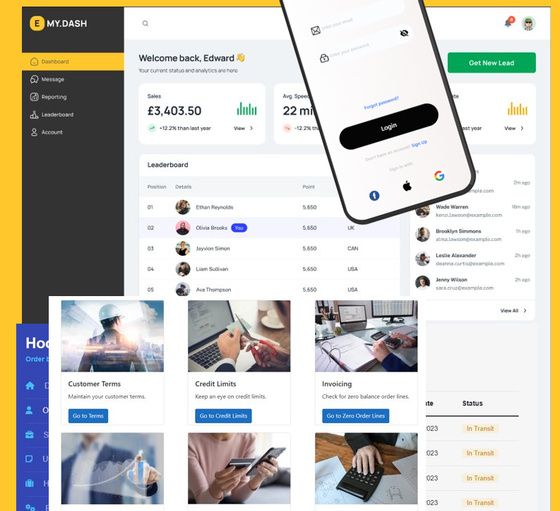
- Interfaces that enable decisions: role-based views for sales managers, real-time alerts for operations, and scenario tools for finance.
- Secure, compliant governance baked in from day one, not strapped on when the auditors arrive.
The value isn’t just a tidy graph. It’s a chain of reliability: every number traceable, every metric well-defined, every action measurable. That’s where confidence comes from.
Build vs buy: when custom analytics is worth it
Off-the-shelf tools are brilliant — until they aren’t. They excel at common patterns across industries. But if your competitive edge comes from how you do things (not simply what you do), you’ll quickly bend those tools into pretzels trying to extract meaningful insight.
Bespoke is worth it when:
- Integration complexity is your bottleneck. If your truth lives in five systems that disagree like squabbling siblings, custom ingestion and modelling will save endless reconciliation.
- You need differentiation. A forecasting model tailored to your demand signals, seasonality, and constraints can’t be templated without dilution.
- The questions change often. If the business asks new “why” and “what if” questions weekly, rigid tools slow learning; custom pipelines encourage curiosity.
- Governance matters. GDPR, consent management, lineage, and auditability are smoother when designed into the foundations.
- You care about total cost of clarity. Licences are visible; time wasted massaging CSVs and reworking brittle reports is not. Total cost of ownership includes cognitive and operational drag.
When should you buy? If your process is standard, your metrics are conventional, and integration is light, a quality BI tool might cover 80% of needs. The final 20%, the bit that truly differentiates you, is often where bespoke shines.
Anatomy of a modern data stack (without the buzzword hangover)
Everyone has a diagram with boxes and arrows. Here’s the gist without (some of!) the jargon.
- Ingestion: Bring data in reliably from first-party sources (ERP, CRM, web, apps), third-party APIs, and event streams. Use connectors when they’re robust; build when precision matters.
- Storage: A warehouse or 'lake' where data lives with sensible partitioning, security, and lifecycles. Cloud-native is usually pragmatic; multi-cloud if your risk appetite demands it.
- Transformation: Clean, deduplicate, standardise, and model. This is where “customers” become a single entity and not seventeen near-matches. Declarative transformations and version control keep things sane.
- Semantics: Define metrics once, use everywhere. Revenue, churn, fulfilment time — one definition, universally applied. No quiet renegotiations in slide decks.
- Serving: Dashboards, embedded analytics, APIs for internal tools, and events that trigger workflows. Real-time where it matters (ops), batch where it’s efficient (finance).
- Observability: Tests, freshness checks, lineage maps, and alerts. If a pipeline sneezes, someone gets tissues — and the root cause.
- Security and privacy: Access policies, encryption, masking of personal data, and full audit trails. Nothing undermines analytics faster than mistrust.
Done well, this stack fades into the background. Your stakeholders feel a fast, dependable flow of insight. Your engineers sleep better because gremlins can be caught before breakfast.
Streaming vs batch: choose your battles
- Use streaming for operational levers: fraud checks, queue balancing, dynamic pricing, alerting.
- Use batch for analysis and planning: trend modelling, cohort analysis, month-end reporting.
- Use both when the loop is mixed: real-time detection, daily recalibration. Most real businesses live here.
Turning data into decisions: from metrics to narratives
A clever metric is not a decision. It’s a sentence; the decision is the story. The most effective analytics stacks support narrative creation — context, cause, effect, and counterfactuals.
- Start with intent: What decision will this inform in the next week? Who owns it?
- Separate leading and lagging indicators. Conversion rate is lagging; first-interaction quality might lead.
- Embrace experiments. If you can’t try things safely, data becomes academic. Good bespoke systems lower the cost of learning.
- Include “what might happen” (forecasting) and “what should we do” (prescriptive). If inventory is tight, which orders get priority? If demand shifts, how should you staff?
- Close the loop. Track the decision taken and the outcome, then feed it back to retrain models or refine thresholds.
Tools amplify culture. A culture that asks precise questions and measures the aftermath benefits most from bespoke analytics. It’s the business equivalent of a gym membership you actually use.
Designing for humans: the UX of analytics
We’ve all opened a dashboard that looks like an aircraft cockpit designed by committee. Bespoke software grants you the right to be intentionally simple.
- Role-first design: Give sales leaders pipeline health and revenue risk. Give ops teams alerts and levers. Give finance forecast confidence and variance.
- Make the default view answer “Do I need to act?” If yes, “How?” If no, “When might I?”
- Write like a human: labels with verbs, metrics with definitions, tooltips that educate, not obfuscate.
- Build “explain” buttons. A metric without lineage is witchcraft; show the path from raw data to this number.
- Notifications that respect humans: batched, deduplicated, and actionable. Your phone buzz should be a cue, not a jump scare.
Good UX is a performance multiplier. It turns occasional browsing into disciplined, habitual decision-making.
Governance, privacy, and trust (yes, the serious bit)
No one gets excited about policies until something goes wrong. Bespoke analytics helps you stitch good practice into the product itself.
- GDPR by design: clear lawful bases, consent tracking, data minimisation, retention schedules, and deletion workflows that actually delete.
- Access you can explain: role-based permissions, attribute-level controls, and masked fields for sensitive data.
- Lineage and audit: who touched what, when, and why. Not just to satisfy auditors — to help engineers reverse the odd Friday deploy gone sideways.
- Model risk management: for machine learning components, document training data, explainability, and monitoring for drift. Nobody wants a confidence interval that’s confident for the wrong reasons.
Trust isn’t a checkbox; it’s continuity. When people trust the numbers, behaviours change.
Measuring ROI: finding value without mental gymnastics
The ROI of bespoke analytics is often hiding in plain sight. Look for value in three lanes.
- Efficiency: fewer manual reconciliations, faster reporting, less swivel-chair work. Time back to focus on higher-value tasks.
- Revenue: improved conversion, reduced churn, better pricing, smarter cross-sell. Even small percentage lifts compound handsomely.
- Risk: earlier detection of anomalies, compliance-by-default, fewer costly surprises.
A simple method:
- Choose 3–5 decisions you make frequently that carry weight.
- Estimate their annual value swing if improved by 5–10% (be conservative).
- Calculate the cost of achieving dependable, timely insight on those decisions.
- Time-to-value matters. Aim for a first meaningful metric in 6–10 weeks, not six months.
Remember: analytics should replace arguments, not start new ones.
What clients say when the dust settles
We like to think craftsmanship shows through. Our clients tend to agree.
“Working with Atreon has been an outstanding experience from start to finish. They built our entire tech stack exactly to the brief, delivering everything on time and within budget, which was crucial for us.
Their technical expertise, combined with a deep understanding of our needs, ensured the development process was smooth and efficient. The final product not only meets but exceeds our expectations in terms of functionality and performance.
We couldn't be happier with the results and highly recommend their services to anyone looking for top-notch development.“ — Automotive
“We have been genuinely impressed with the service we have received to date. Adam and Josh have both been excellent throughout and have really stood out in the way they have supported us...
What has made the difference for us is that nothing ever feels too much trouble... They are clearly focused on finding a solution rather than creating a barrier...
It is refreshing to work with people who clearly care about the service they provide and who back that up with action. We have really valued their support and look forward to continuing to work together.” — Construction
How we build bespoke analytics at Atreon
We’re UK-based, technology-agnostic, and oddly enthusiastic about gnarly data. Our approach is simple and relentlessly practical.
- Discovery with decisions: we start not with “what data do you have?” but “which decisions matter most?” Then we map the shortest path to inform them.
- Design the model around your domain: entities, events, and metrics defined collaboratively with your teams. Your business in a schema, not someone else’s template.
- Ship value in slices: a first live metric or alert within weeks, not months. Confidence climbs with each iteration.
- Engineer for change: modular pipelines, version-controlled transformations, and automated tests. Questions evolve; the platform should too.
- Secure by default: data minimisation, fine-grained access, lineage, and auditability baked in.
We’ve delivered full stacks end-to-end — from data ingestion to predictive models and embedded operational tools. If “no” is the easy answer, we keep asking “how might we?” (Politely. We’re British.)
Practical next steps for your organisation
If you’re wondering where to begin, try these pragmatic steps.
- Audit your critical decisions: choose five that move revenue, cost, or risk.
- Map questions to data: for each decision, list what you wish you knew and where it might live.
- Clean one pipe: fix a single high-value data flow end-to-end — source, model, metric, and action — as a pilot.
- Define your handful of metrics: shared definitions everyone can defend. Write them down, agree once, reuse everywhere.
- Prototype the interface: even a rough clickable mock helps stakeholders align on what “useful” looks like.
- Plan governance now, not later: access, retention, consent, and audit. Boring, yes. Essential, absolutely.
- Choose stack pieces you can support: prefer boring, proven tech over brittle novelty.
- Measure time-to-decision: not just time-to-dashboard. Did the metric change a choice?
If you’d like a hand, Atreon can help you run a focused discovery, sketch the architecture, and deliver a working slice that proves value without betting the farm.
A brief word on cost — and why clarity is cheaper than confusion
The invisible cost in analytics is the conversation that goes nowhere: three teams debating definitions, three hours gone, nothing decided. Bespoke software reduces that friction. You pay once to make the right thing easy instead of paying forever to make the wrong thing work.
We often build to a cadence: an initial 3–6 week engagement to get a decisive capability live, followed by measured iterations. You own the code and the path forward. No handcuffs; just craftsmanship.
The quiet revolution you can actually use
The “data revolution” isn’t about bigger numbers or flashier charts. It’s the gentle, compounding advantage of better decisions made sooner. It’s a manager reallocating vans before traffic snarls. It’s a CFO spotting risk a quarter early. It’s a store avoiding a sold-out sign at 12:15 on a drizzly Thursday.
And yes, it’s the person on the Jubilee line who closes one spreadsheet, opens a simple view, and knows exactly what to do next. That’s the kind of quiet we’re here for. If you’re ready to trade noise for nuance, bespoke analytics might be the most sensible conversation you have this quarter.